Vienna.i.Lab
The District's Flagship AI & Sustainability Innovation Center
The Strategic Case
Artificial intelligence has already arrived in our classrooms. Every semester without structured AI literacy instruction is a semester where 93,904 FCPS students fall further behind the conceptual fluency they will need to navigate the world they are inheriting. The inflection point is not five years away. It was last year.
Vienna Elementary is not a random selection. It is the site where this work has already been proven. The PTA-supported AI learning pilot that David Reynolds, Jr. built in the school library has been recognized by NBC Washington, Fox5, and FCPS communications as a proven model. The infrastructure exists, the community support is documented, and the track record speaks for itself. Vienna is the natural flagship site because it already functions as one.
A single, purpose-built flagship center creates something that 141 distributed efforts cannot: a replicable model. Rather than spreading thin resources across every school and producing diluted results everywhere, concentrating investment at Vienna builds a proof-of-concept that can be documented, measured, refined, and then scaled. The flagship model serves every school by giving them a blueprint worth following.
Without a flagship, FCPS risks the status quo: incremental, uncoordinated efforts that produce neither meaningful innovation nor equitable access. The flagship model creates a center of gravity - a place where best practices are developed, where visiting classes experience the future, and where the district builds the institutional knowledge required to scale AI literacy responsibly.
The question is not whether FCPS students need AI literacy - it is whether FCPS will lead or follow.
Media Validation
The Vienna.i.Lab pilot has earned regional and national media coverage, providing independent third-party validation that this program delivers measurable, documented results recognized by journalists and district communications alike.
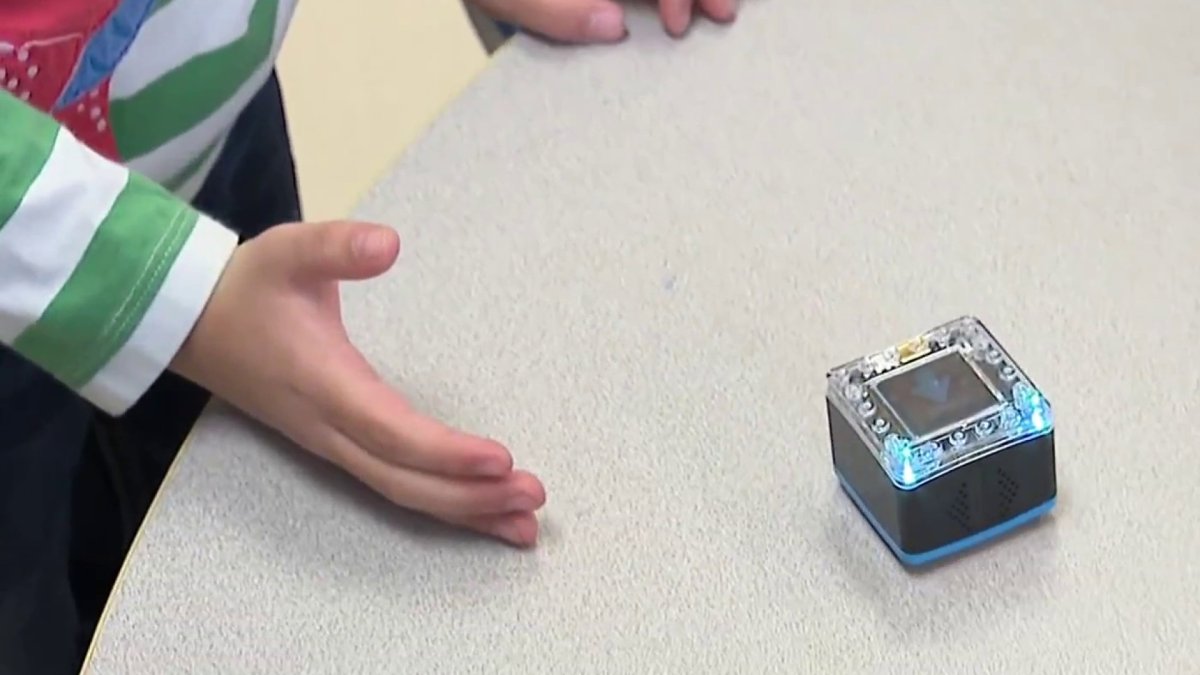
Vienna Elementary's AI Lab Gets Students Ready for the Future
NBC Washington covers how Vienna Elementary students are gaining hands-on AI experience through the school's innovative lab program.
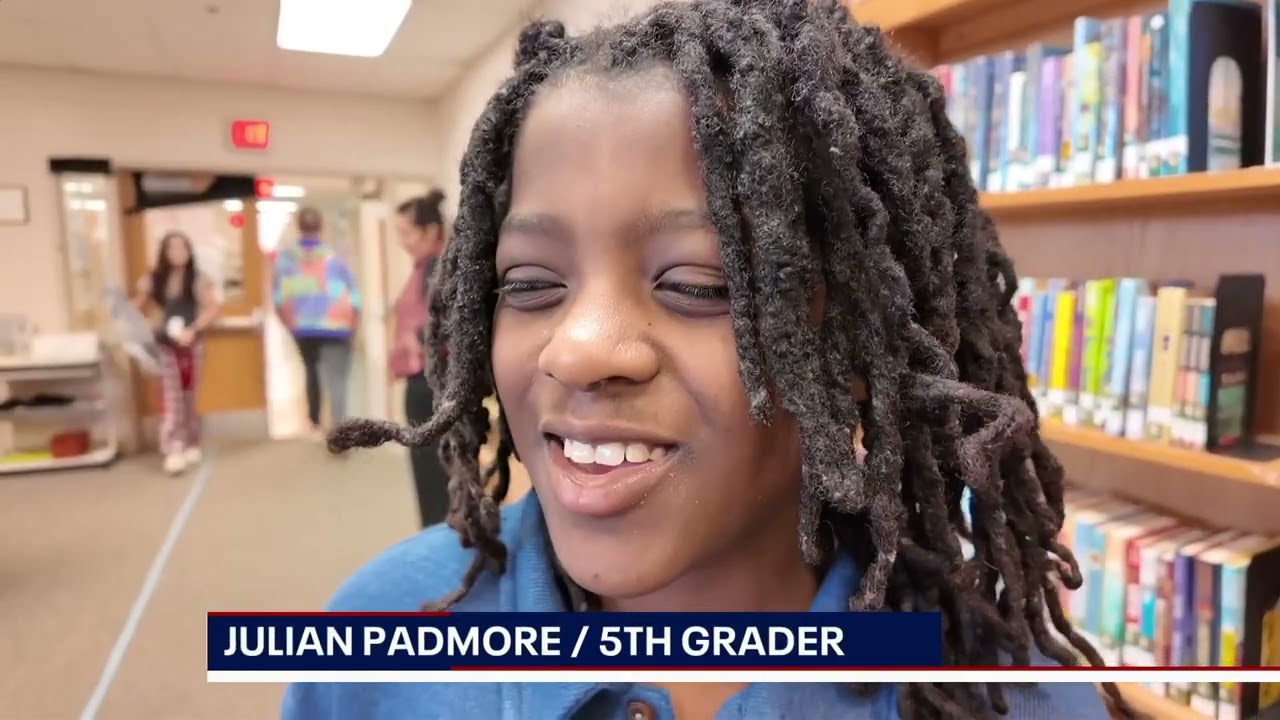
FCPS Students Get Hands-On AI Experience at Vienna Elementary
Fox5 DC highlights the pioneering AI education program giving Fairfax County students real-world technology skills.
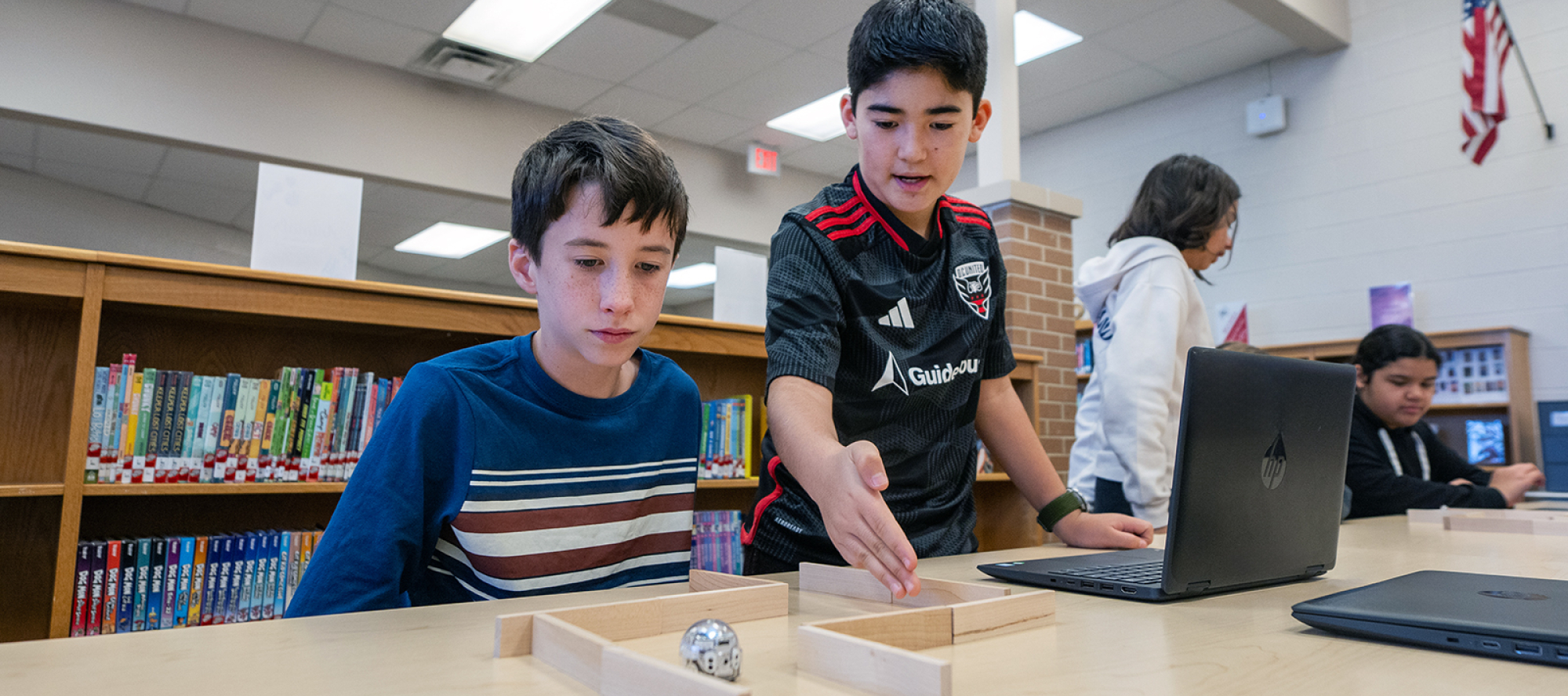
Vienna Elementary Innovation Lab Recognized for AI Education
Official FCPS communications recognize the Vienna Elementary innovation lab as a model for AI-integrated learning across the district.
Article links will open in a new tab.
Current Impact
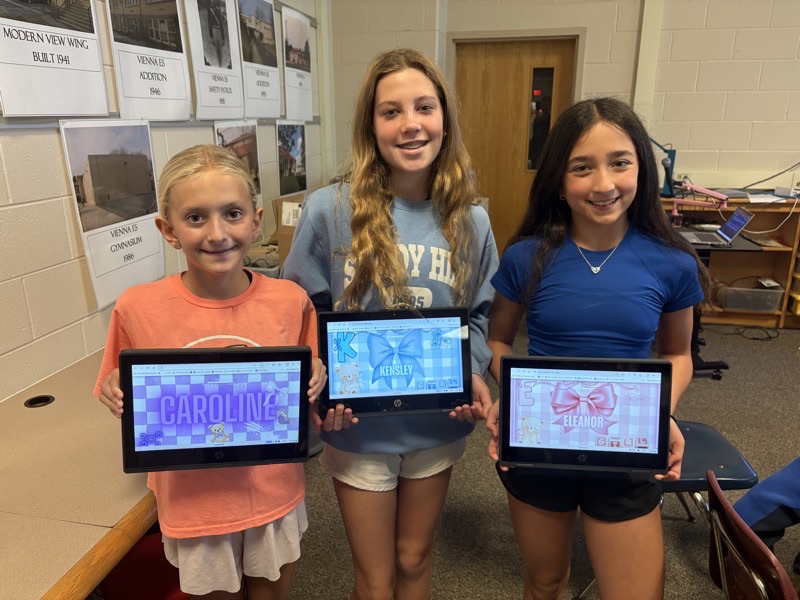
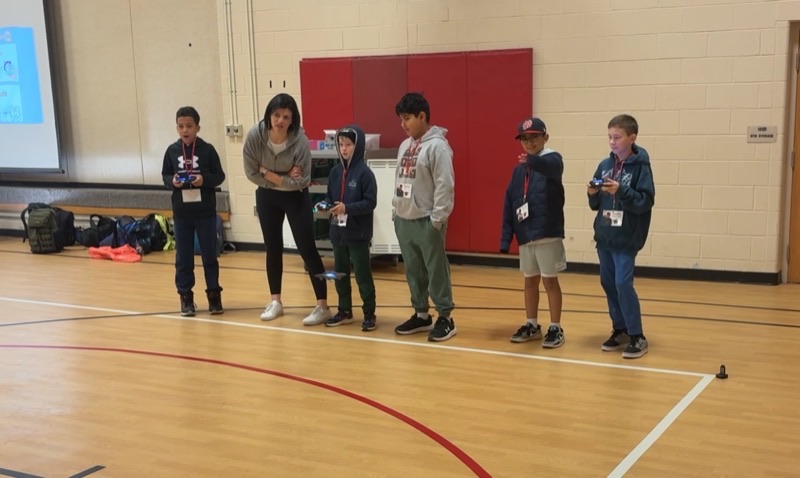
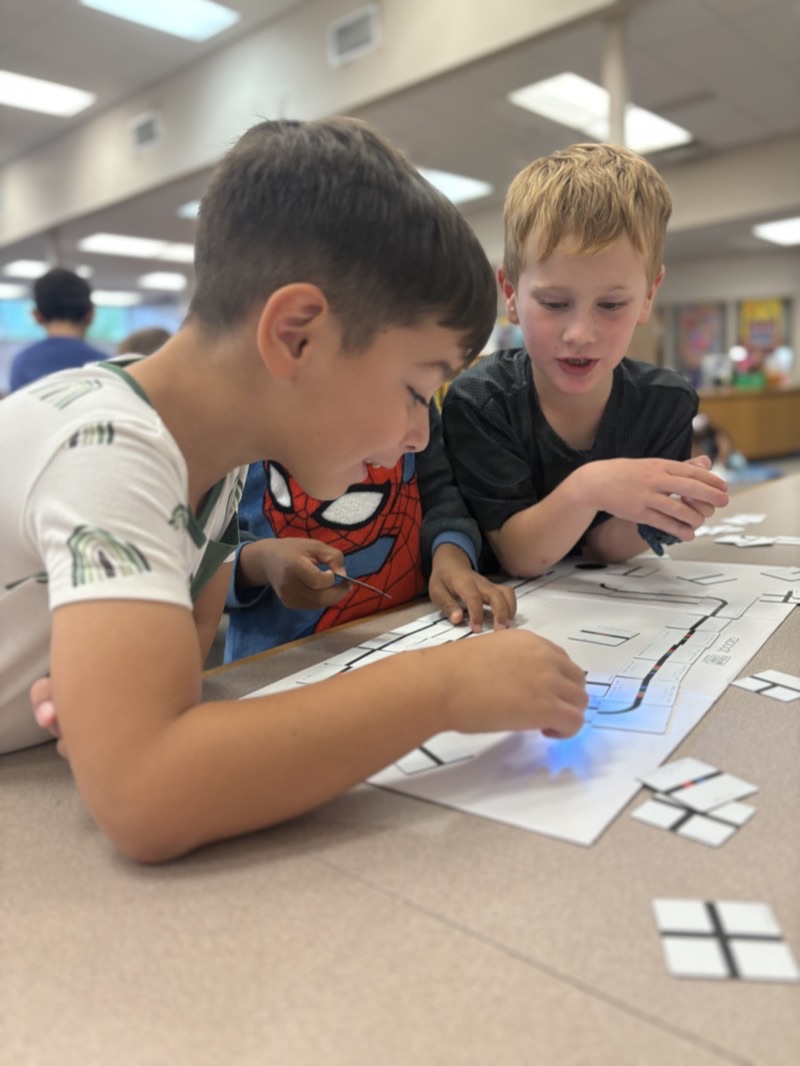
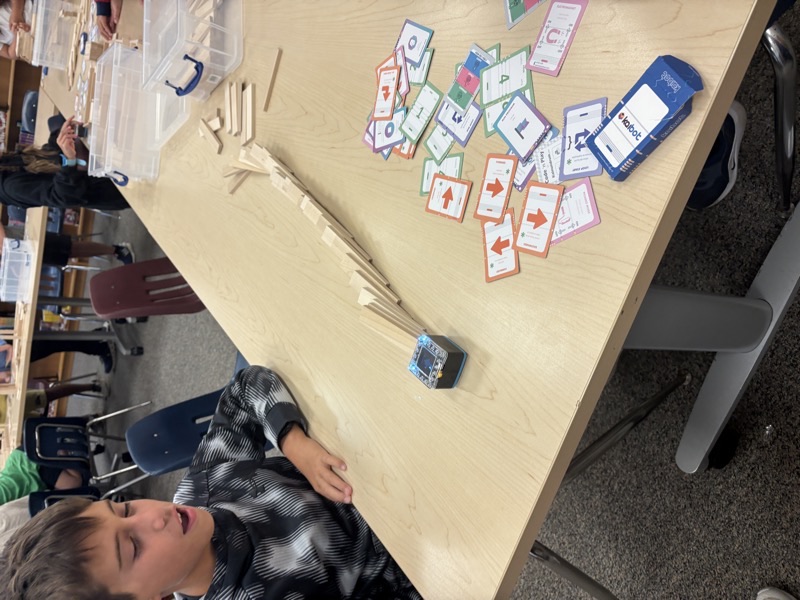
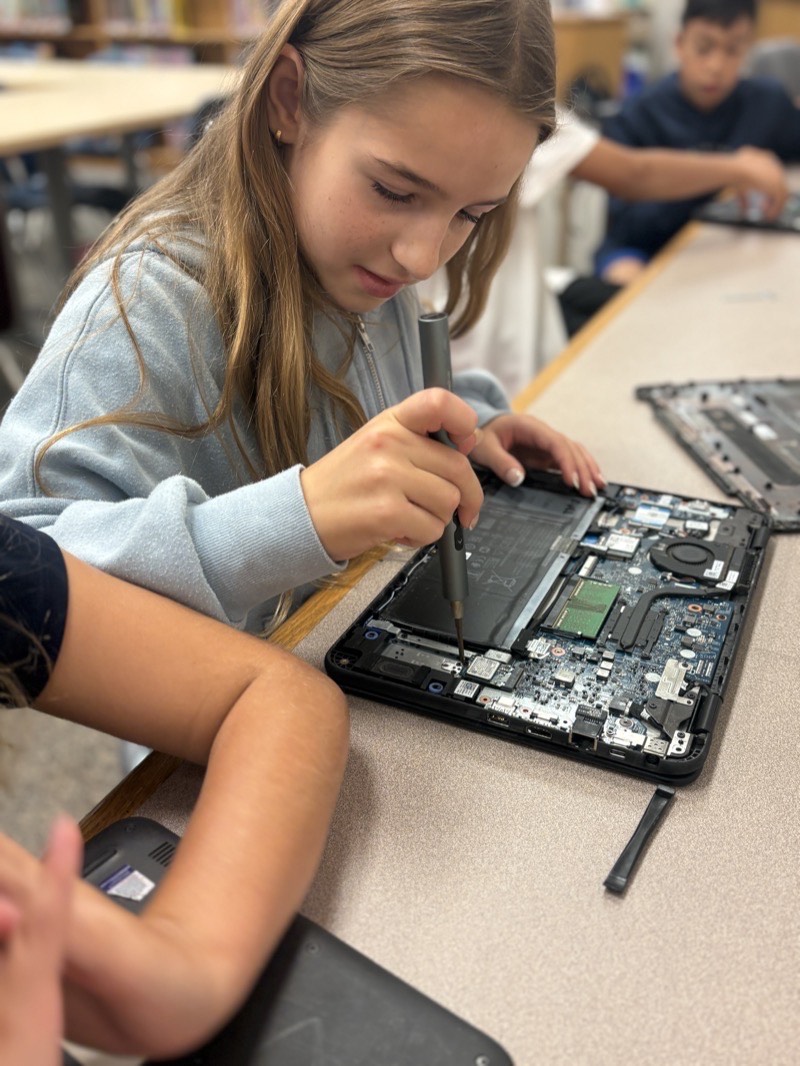
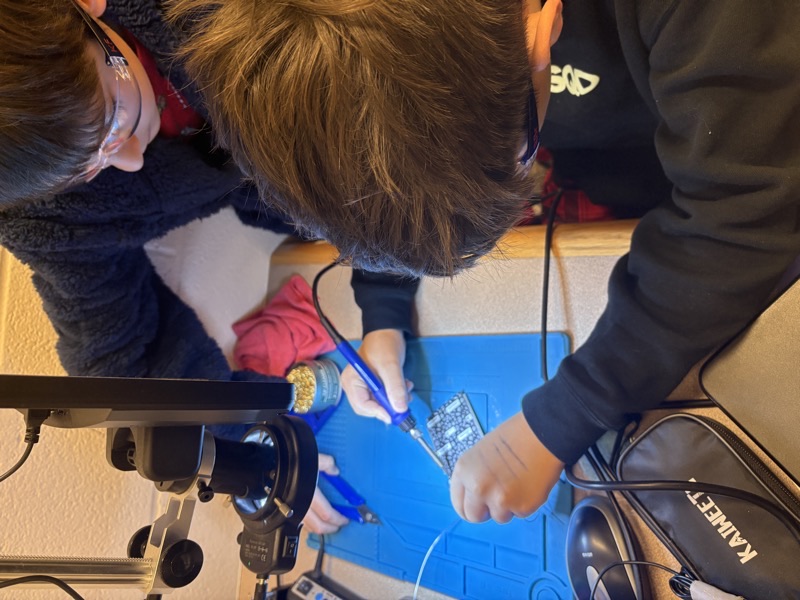
The Vienna.i.Lab already exists as a PTA-supported pilot in the Vienna Elementary School library. What started as a library transformation has become a regionally recognized AI learning environment for K-6 students. These photos show the current reality: students actively engaged in AI, robotics, and maker education.
The Facility
This goes far beyond renovation. Behind Vienna Elementary, a purpose-built, partially subterranean innovation center will rise from the ground: a two-level structure where a glass atrium entrance gives way to specialized learning environments designed from the foundation up. From floor plan to mechanical system, the building itself teaches.
The Subterranean Innovation Atrium
At grade level, visitors enter through a glass atrium, the building's entry port and its most visible architectural statement. Natural light floods the interior before the space transitions downward into the subterranean core of the facility. A clear-top tube slide descends from the atrium to the lower level, a signature feature that signals to every student, visitor, and superintendent that this facility is unlike anything else in the district. The design is deliberately dramatic. Descending into the Innovation Center communicates the ambition before a single lesson begins.
The upper level, visible from the entrance and bathed in atrium light, houses the AI Studio, Maker Commons, Digital Media Studio, AR/VR Immersion Space, and a series of glass-walled Design Pods overlooking the lower level from an observation balcony. These spaces are designed for collaboration, ideation, and digital creation, forming the conceptual tier where students think, design, and iterate.
The lower level is where ideas become physical. The Fabrication Lab, isolated with negative air pressure for safety, anchors this floor alongside the CNC and Wood Shop, the Aquaponics and Hydroponics Sustainability Lab, and a Sensory Lab designed for inclusive, multi-sensory learning experiences. The Glass Atrium Connector serves as the central circulation spine, linking both levels through the building's luminous core.
The Building Teaches
The sustainability systems integrated into this facility are themselves curriculum. Geothermal HVAC regulates the subterranean environment while generating real-time data students can monitor and analyze. Rooftop solar panels power the building and provide a live energy production dashboard. A greywater reuse system demonstrates responsible resource management. The aquaponics integration creates a living laboratory where biology, chemistry, engineering, and environmental science converge in a single system students manage themselves.
Each green feature doubles as an instructional tool embedded in the infrastructure. Students do not read about sustainability - they operate it. They track kilowatt-hours, measure water quality, harvest produce, and present findings. The infrastructure IS the instruction, and the building is the most integrated teaching tool in the district.
Every system in this building is a lesson waiting to be taught.
Innovation Center Zones
AI Studio
Model training, prompt engineering, AI concept exploration
Maker Commons
Open workspace for prototyping, collaboration, and design thinking
Digital Media Studio
Video production, podcasting, digital storytelling
AR/VR Immersion Space
Augmented and virtual reality experiences, spatial computing
Design Pods
Overlooking lower level, small-group ideation spaces
Fabrication Lab
3D printing, laser cutting, negative air pressure isolation
CNC & Wood Shop
Computer-controlled fabrication and traditional woodworking
Aquaponics Lab
Living sustainability systems as hands-on curriculum
Sensory Lab
Inclusive multi-sensory learning experiences and adaptive technology
Glass Atrium
Ground-level entry port, tube slide descent, natural light cascade, central circulation
STEAM 2.0 Academic Model
The goal here is AI-literate thinkers, not junior programmers. STEAM 2.0 means science, technology, engineering, arts, and math are woven through every project, with artificial intelligence as the connective thread and sustainability as the real-world context. Students encounter every subject as an integrated dimension of the same problem.
Building Mental Models
- Pattern recognition and classification activities
- Token simulation and unplugged AI concepts
- Robotics fundamentals (sequence, input/output)
- Collaborative design challenges
- Sustainability observation and journaling
From Concepts to Creation
- Model training simulations and image classification
- Prompt engineering and AI tool fluency
- Engineering design process with fabrication
- Digital media production and storytelling
- Sustainability data analysis and system management
The progression from K-3 to Grades 4-6 is intentional. Younger students build the conceptual vocabulary (what a pattern is, how a sequence works, why input determines output) so that by grade four, they can engage meaningfully with AI tools rather than just clicking buttons. A student who has spent three years classifying objects, simulating token prediction, and programming simple robots arrives at prompt engineering with a mental model that makes the technology legible, not magical.
Sustainability is the authentic context for every project, woven in from the start. Students monitor the building's actual solar output and geothermal performance. They manage the aquaponics system, test water quality, and harvest produce. When the context is real, the learning is durable.
Equity by Design
Equity at Vienna.i.Lab is a structural feature of the operating model: built into the budget, the schedule, and the facility itself. Each week, the center opens its doors to students from across the division who would otherwise never access this kind of learning environment. Buses, lunches, and budget are already in place. This is equity by design, not by accident.
Every Friday, two visiting classes (approximately 30 students each) from schools across the division receive a full-day immersive experience at the Innovation Center. All FCPS schools are eligible, with priority scheduling given to Title I and historically underserved communities. Transportation is provided by the district. Lunch is included. The logistics are funded, scheduled, and operationalized as a core function of the facility.
Why this matters: many FCPS students will never have access to 3D printers, AI training tools, or aquaponics systems through their home school. The resources simply do not exist in every building. The Friday program ensures that zip code does not determine access to future-ready learning. Whether a school is Title I or not, every student in the division has a pathway to this facility, and the schools with the fewest resources get there first.
The five-year trajectory makes the scale clear. At 1,800 visiting students per year, the center will serve more than 9,000 district students beyond Vienna Elementary over its first five years of operation. This is a pipeline: a systematic, funded, repeatable mechanism for delivering equitable access to learning environments that individual schools cannot build on their own.
Equity is not a program we run on Fridays. It is the reason this building exists.
Governance & Risk Mitigation
The Vienna.i.Lab is designed to operate squarely within FCPS's existing organizational structure. Clear governance, a defined leadership pipeline, and an advisory council ensure that this center is institutionally sustainable from day one. And every foreseeable risk has been paired with a mitigation strategy before the first shovel breaks ground.
Leadership & Staffing Model
Years 1-2: The founding director (currently David Reynolds, Jr., SBTS at Vienna Elementary) leads the center's buildout, curriculum development, and community partnership establishment. The staffing model includes a lab technician, a part-time sustainability coordinator, and rotating FCPS instructional specialists.
Year 3 transition: A full-time, district-hired Innovation Center Director assumes operational leadership. This transition is planned from day one. The center is designed to outlast any individual. An Advisory Council comprising district administrators, community leaders, university partners, and corporate sponsors provides strategic oversight and ensures alignment with district priorities.
Anticipated Risks & Embedded Solutions
Subterranean construction encounters unexpected site conditions, cost overruns, or permitting delays.
MitigationMidpoint-high budgeting with built-in contingency. Phased construction allows early-stage operational use of upper level while lower level completes. Geotechnical survey included in feasibility study scope.
Annual operating costs exceed budget or district funding priorities shift.
MitigationHybrid funding model diversifies revenue (district + grants + corporate + municipal). $685K stabilized budget by Year 3 is conservative. Naming rights and corporate sponsorship provide supplementary revenue streams not dependent on district allocation alone.
Community perceives the center as benefiting only Vienna Elementary students, undermining district-wide support.
MitigationThe Friday visiting program (1,800 students/year from across the division) is budgeted, scheduled, and visible from launch. Transportation and lunch are line items, not aspirations. The center's brand is built around district service, not school-level enrichment.
Key personnel departure disrupts operations or institutional knowledge.
MitigationYear 3 director transition is planned, not reactive. Curriculum documentation, SOPs, and advisory council oversight ensure operational continuity independent of any single staff member. The center runs on systems, not personalities.
Every risk in this plan has been answered before it was asked.
The Financial Model
The total capital investment for Vienna.i.Lab is $4.2 million, modeled at midpoint-high budgeting with contingency built into every line item. The stabilized annual operating budget reaches $685K by Year 3. All figures are conservatively modeled with multiple funding sources, no single point of financial failure, and a cost-per-student figure that undercuts comparable programs across the region.
Capital Investment: $4.2M
Annual Operating Budget: $685K (Year 3 Stabilized)
Hybrid Funding Strategy
The $4.2M capital investment is designed to be funded through a hybrid model that does not depend on any single revenue source. District capital plan alignment and existing bond capacity provide the primary funding mechanism, supplemented by a municipal partnership with the Town of Vienna, which has a direct interest in the facility as a community asset. Federal and state STEM education grants (including Title IV-A and Virginia's Innovation Fund) target exactly this type of purpose-built learning infrastructure.
Corporate sponsorship and naming rights create a supplementary revenue stream that reduces district financial exposure while building private-sector partnerships. The operating budget follows the same diversified model: district allocation covers core staffing, while grants, sponsorships, and program fees for external groups sustain technology refresh and enrichment programming. No single funding source represents more than 40% of either the capital or operating budget. The diversification is deliberate.
Cost Per Student
For context, specialized enrichment programs in comparable Northern Virginia districts range $400-$800 per student annually. Vienna.i.Lab delivers a purpose-built, permanently staffed facility with sustainability infrastructure, AI tools, and fabrication equipment, year-round and fully operational. At $358 per directly served student per year, amortized over five years, this is among the most cost-effective innovation investments available to any district in the region.
Five-Year Trajectory
From feasibility study approval through full operation, every year has defined milestones, measurable deliverables, and clear accountability. This is a disciplined buildout, not an open-ended experiment.
Feasibility Study
- Approve feasibility study funding
- Geotechnical survey and site assessment
- Architectural concept development
- Community engagement and stakeholder input
Design & Approvals
- Complete architectural design and engineering
- Secure permits and regulatory approvals
- Finalize hybrid funding commitments
- Launch corporate sponsorship outreach
- Begin curriculum framework development
Construction & Buildout
- Break ground on Innovation Center
- Upper level construction completed (mid-year)
- Begin technology and equipment procurement
- Hire Lab Technician and PT Sustainability Coordinator
- Early programming in upper level while lower level completes
Full Activation
- Lower level construction completed
- Full facility operational
- Hire full-time district Innovation Center Director
- Launch Equity Friday visiting program (1,800 students/year)
- Stabilize annual operating budget at $685K
- Advisory Council formalized
Optimization & Scaling
- Refine curriculum based on Year 3 data
- Expand corporate and grant partnerships
- Begin documenting replication blueprint
- Host district-wide educator professional development
- Publish first annual impact report
Full Operation & Replication
- 100% AI literacy across all directly served students
- 9,000+ cumulative district visitors
- Near 100% energy offset, achieving zero carbon footprint
- Replication blueprint ready for district-wide scaling
- Present to Board for expansion authorization
Measurable Outcomes
By Year 5, the Vienna.i.Lab will prove its success with data. Each benchmark below is a measurable accountability commitment tied to the facility's core mission.
AI Literacy Across Served Students
Students who complete the Vienna.i.Lab program, whether from Vienna Elementary or the Equity Friday program, will demonstrate measurable AI conceptual fluency appropriate to their grade level.
District Students Served
Cumulative visiting students from across the division through the Equity Friday program. Documented by class, school, and district region to verify equitable distribution.
Zero Carbon Footprint
The facility's integrated geothermal, solar, and greywater systems are designed to achieve near 100% energy offset and zero carbon footprint, monitored in real-time by students as living curriculum.
Replication Blueprint Published
A documented, board-ready model for replicating the Innovation Center concept at additional FCPS sites. Includes facility specs, curriculum framework, staffing model, and budget templates.
These are commitments. Built into the operating model and reported annually.
The Ask
The case for Vienna.i.Lab has been made from every angle. It is a proven pilot ready for investment. Three actions move this from proposal to reality.
Approve the Feasibility Study
Fund a comprehensive feasibility study including geotechnical survey, architectural concept development, site assessment, and community engagement process. The rest of the timeline depends on it.
Align Capital Planning
Include the Vienna.i.Lab Innovation Center in the district's capital improvement plan and bond capacity analysis. Early alignment ensures the project is positioned for funding when the feasibility study delivers its recommendations.
Establish Flagship Designation
Formally designate Vienna.i.Lab as the FCPS flagship AI and sustainability innovation center. This designation provides institutional identity, enables partnership development, and signals district commitment to the innovation ecosystem.
Vienna.i.Lab is ready. The question is not whether this should happen - it is whether Fairfax County will lead or watch others do it first.
David Reynolds, Jr. | SBTS, Vienna Elementary School